The Lonely Sweater

Glancing in the window of a recently closed children’s consignment shop, I spotted this tiny orange sweater, hanging forlornly in the now abandoned store front.  This sad sight left me to ponder why this one vibrant item adorned in grinning teddy bears, remained. Perhaps a testament to a dream that was not to be or more simply that the sweater was left in haste?  

I like to interpret it as a statement of fortitude left behind by the proprietor.   A symbol that whatever the future brings, he or she will survive. That brilliantly colored, wee tangerine sweater, a symbol of strength, faith, hope.

I shall leave the interpretation to you gentle readers…

sweater

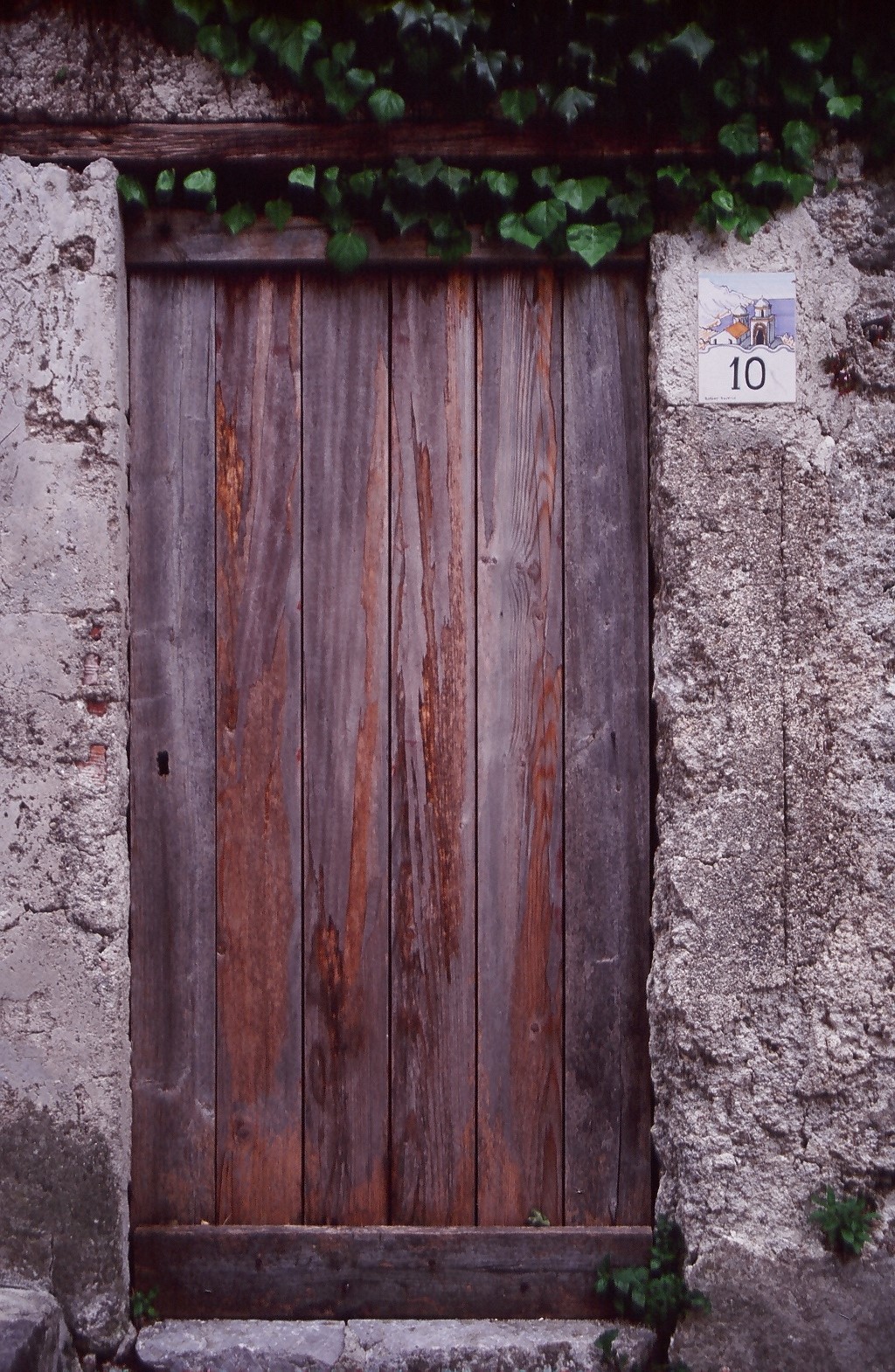
Thursday Doors

“Not knowing when the dawn will come, I open every door…”

Emily Dickinson

Re-sharing an old post this morning for Thursday doors, because you cannot have too many reminders…

Barbara Marshall

For Leslie

“Mom, there’s a lady in the bushes,” said my six year old son nonchalantly. He sat fixated in front of the television, mesmerized by the dance moves of his very favorite group “The Wiggles,” icons of the ten-and-under set. The charismatic foursome clad in identical black pants and vividly colored tee shirts, were singing one of their most popular songs, a catchy tune called “Central Park New York.” Ironic I thought, as we had just last week moved from Manhattan to suburban Connecticut. Yes, we were finding that life was different from the city in many ways. A neighbor in the bushes, was just one of them.

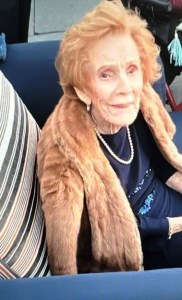
I pulled the curtains open to indeed see a figure aside our front door, tiny in stature but clearly spry, admiring the pink hydrangea. Her gray hair was styled in a chic bob and she was handsomely clad in a bright red poncho and navy Ked sneakers. Her face was devoid of makeup emitting a healthy and outdoorsy aura and I guessed her to be around seventy. As our eyes met she smiled broadly then spoke, “Why my dear! I had no idea anyone had moved in. My name is Barbara Marshall and I live right across the street with my husband Ronnie. Welcome! I am so pleased to meet you.”

And so it began, a fast, fun-filled and everlasting friendship.

We shared many similarities. We had both lived and moved from New York City to Connecticut though Barbara was born there, a true and tried New Yorker. She had moved to the suburbs over thirty years ago or rather, as she put it, “was taken kicking and screaming” from her beloved Park Avenue to the wilds of Weston, CT. It was her husband’s doing, she told me. His company was relocating from NYC to Connecticut and there was nothing to be discussed. They were moving. And alike the plot line in the old sitcom, “Green Acres,” with Ronnie playing the role of Eddie Albert, the husband who longed for country life, they shortly thereafter departed.

For as long as I knew her, Barbara never quite considered Connecticut her true home and always longed to return to her beloved New York City. Despite her protests, she and her husband Ronnie, remained in the semi-rural but pleasing town of Weston, CT where she raised her son and daughter, now grown and flown. And as with everything she did, Barbara with her own unique flair, sought out the very best and most interesting that small town life offered.

We saw each other frequently. I was a stay at home mother and Barbara worked part time at Planned Parenthood. We lived directly across the street making it simple, at any opportunity, to seek each other out. And as if sensing I needed a Barbara fix, I would sometimes open my front door to find her standing on my stoop preparing to ring the bell.

She was theatrical, witty, and a master story teller. Our town was ideal for anyone who wished to live anonymously due to its vast open space with two acre zoning and as a result, was home to many a celebrity back in the day: Bette Davis, Robert Redford, Eartha Kitt, Christopher Plummer, Rodney Dangerfield. Barbara always seemed to have a personal anecdote about each and every one.

She told me of the many Weston cocktails party she attended with her husband Ronnie back in the 1960’s and 70’s some of which sounded legendary. A great beauty and conversationalist, Barbara on more than one occasion received invitations from her many admirers for weekends away in exotic locales. Though she never once took them up on their offers I laughed as she candidly shared her sometimes regret in not doing so.

She described how our town was once the backdrop for the award winning movie, “The Swimmer” starring Burt Lancaster and where many of the homes featured in the film were located. And I imagined how effortlessly she would blend in if cast as an extra in the iconic film.

She was fiercely strong minded, ever curious and opinionated, never shying away from voicing her opinions on politics, fashion, family or frankly, any other topics of which she felt passionate. I admired her for that but it could sometimes wreak havoc depending upon the nature of the person with whom she was debating. A common scenario when we were out and about town together was Barbara confiding, “Oh look, there’s Joan Bradley. She was such great fun…when we used to be friends.”

My two young sons adored Barbara and delighted in a story I would often tell them involving the legend of Big Foot which they equally loved. Our back yard abutted a nature preserve with every creature imaginable, lurking morning, noon and night. In my version of the story, Big Foot was not fierce but a shy, amiable and lovable creature who ended up taking residency in the woods behind our house. And who possibly but Barbara, a nature lover herself, would I cast as the main character? The short tale I would tell them at bed time went something like this: while out strolling one evening in our backyard, Barbara suddenly comes face to face with our resident Big Foot. But rather than fainting in fear or being dragged away into the preserve, Barbara and the creature form a deep and everlasting friendship. She teaches him to stand up for himself, be bold and face life’s fears and challenges. Each time I told my boys the story, Barbara and the Big Foot would be embarking on another escapade together, always looking out for each other. I completely envision this story being true to life as Barbara Marshall was a faithful friend to all, both man or beast.

She took great joy and humor in my telephone answering machine’s outgoing message which stated, “We’re not here right now, please leave a message and we will call you when we can…” I had not given the message a second thought but understood her point. It was as if we were saying “don’t expect a call back anytime soon.” Barbara after advising she had called earlier and left a message, never failed to repeat the last line on the machine while laughing delightedly, “We will call you when we can! Oh my dear, I just LOVE that line, “when we can!”

She loved our small town market then known as “Peter’’s” where she would often stop for groceries, a particular favorite being their fresh fish. She knew each and every employee by name and they her, from the butcher to the check out girl and could often be spotted standing in the aisle, deep in conversation with Jim, the general manager. He would be nodding enthusiastically as she expertly instructed on just how the salmon could be better prepared to make it just a touch more flavorful. In addition to her other talents. Barbara was also an outstanding cook.

In warmer weather, she enjoyed nothing more than lying in her backyard in one of those simple metal lawn chairs with the plaid green material. Clad in shorts, bare feet and simple but stylish sunglasses, a tall iced tea at her side, she was in heaven. I loved seeing her lounging there, and can envision Barbara still, the New Yorker magazine on her lap and bright sunshine on her face.

But then one day, I turned around and noticed something quite shocking; we somehow, had both grown older. And as hard as I tried, could not say when or how it happened. But here we were; my two sons away at college and Barbara a grandmother of two possessing her still large but suddenly weaker heart.

Our visits were still a constant and her fascinating and unique stories continued to flow. I could never quite get enough of Barbara’s stories. In springtime she enjoyed strolling the path of our jade green back yard, admiring the plentiful daffodils in full bloom and the chirping of the peepers soon to be full grown frogs. For a city girl, she always loved nature.

As the months ticked on, I began to see her less and less. Frequent hospital visits took my friend from me. She was in her eighties now. A small fact that I never really registered. Although she was old enough to be my mother I always viewed her as a peer; a partner in crime. Our friendship and connection transcended age.

“I’d like to just fly away,” she would say to me in those later years when we talked about death. “Nothing complicated my dear. So very simple. I”ll just fly away.”

The last I saw of my cherished friend was not among the flowers and frogs, but rather in a simple and stark hospital room, its unadorned walls so very much the opposite of the brilliantly bright, colorful canvas that was Barbara Marshall. She had taken a fall two days before and had not regained consciousness. Her husband Ronnie and two children, David and Leslie, close by her side.

She was at last ready to fly away.

And as I sat with her that final day I said a last goodbye, grateful for those joyful years having known her. And then, truly believing she still could hear my words, I leaned in, just a tiny bit closer and made my friend a promise.

“I’ll call you when I can…”

Camera Shy

It is 3:30 PM on a balmy Friday afternoon and school has just let out for the weekend. My best friend Janet and I stroll down Plandome Road with no particular direction in mind. Our mood is jubilant, carefree. We chatter about the three most pressing matters in the life of a high school freshman; the boys we have crushes on, upcoming house parties occurring over the weekend and looming midterms. All, in that exact order.

Plandome Road in our hometown of Manhasset, NY is just a stones’s throw from our all girls, Catholic High School and offers an array of shops, restaurants and activities: Manhasset Bowling for the young and old alike, Gino’s Pizzeria offering up the best slice on Long Island, Plandome Caterers with their succulent fried chicken sprinkled with seasoned salt and an old school town Pharmacy run by two gentlemanly brothers. On some occasions when in need of a “glow up,” we skip Plandome Road and head over to A&S dept store where Janet and I try on makeup in abandon, then endlessly critique each other’s color choices.

Another after-school favorite is JJ Newberry’s, whose lower level houses an exotic pet department complete with African frogs and tiny turtles. Though not on Plandome Road it is worth the trek to the other side of town as the lunch counter offers a special draw…”Pop a balloon containing a secret slip of paper and pay from 1 cent to 99 cents for our famous Banana Split!” Spoiler alert: Not once did either of us ever get the one cent balloon but that did little to deter as we twirled on our swivel stools scooping up spoonfuls of banana, hot fudge, and whipped cream, still a bargain at 98 cents.

But this fateful day, we do not go to JJ Newbury’s but continue down Plandome Road making a sharp right on Park Avenue, with a mission in mind… The hope of sighting a glimpse of a Sophomore boy Janet likes, whose family happens to live on that very street and according to Janet was often seen playing basketball on his driveway.

Walking furtively but with purpose we pass a small storefront. Phillipe Photography, a shop that in my recollection seems to have been there forever. Gazing in through the panoramic and spotless glass window, several family as well as solo portraits are strategically positioned on handsome easels. Gazing out smartly at passerbys, they make it impossible for one not to pause for a second look.

“Hey, isn’t that Billy Bradshaw?” Janet asks me, pointing to one of the large, four color portraits positioned artfully, center stage of the window. She opens the shop’s front door and I follow, curious to see if it is in fact Billy, a star Lacrosse player at the boy’s high school, whose female admirers span several towns, all within a ten mile radius.

Entering the studio we are greeted by a stark silence. A small black box sits neatly upon a handsome desk with a note card propped up neatly against it. “I am working downstairs in the studio, please press intercom if you need help.” Fondly, Philippe

I glance at Janet who knowingly and steadily returns my stare. There is a glint of mischief in her eyes. It was as if we both came up with the same idea at that exact same moment in time. The “please press intercom” command, was all we ever needed.

The next few minutes remain both mixed and jumbled in memory. Knowing it is wrong but throwing caution to the wind, I press the intercom. When a deep voice responds, “Yes, may I help?” we shriek into the box, uttering a series of nonsensical words followed by peals of laughter. We then tear out of the store, fleeing at the speed of light down Park Avenue. One thing I do remember clearly; Janet’s crush standing on his driveway, playing basketball, watching the whole scene unfold.

What transpires next is quite possibly a miracle of athletic feat. The spry photographer, with the speed of a gazelle, somehow manages to ascend the stairs of his subterranean dark room in seconds, quite possibly setting a new Olympic record in the process.

He catches us halfway down the street and with a look of utter triumph, grips us each securely by the arm.

Leading us back into the studio we stand before him, hearts pounding. He stares stonily weighing his options, before he finally speaks. His voice is steady, yet tinged with rage. “You two! You come into my studio and say terrible words into my intercom. I must call your parents immediately!”

Heads hung, we await our sentence wordlessly. I can swear I hear Janet’s heartbeat. Suddenly, an alarm sounds from the dark room below and Philippe pauses. “I will be back momentarily! Do not DARE move!” As he turns his back to us and jaunts down the stairs, I turn to Janet. No words are needed. The message is delivered telepathically between us. We jump up and race out the door, this time in the opposite direction of the photographer’s studio taking refuge in the hall of a dental office nearby.

Success! We make it to safety and vow to avoid Park Avenue for the rest of our days.

Fast forward, one year later.

I am sitting in the kitchen of my home and my mother enters. “Don’t make plans for Saturday. I am getting a family portrait done for your father’s birthday. There is this wonderful photographer, on Park Avenue. His name is Phillipe. He will be coming at 10AM…

As my soul leaves my body, I weigh my options. First, feign illness on the morning of the portrait, but that will never fly with my strong Irish mother who would no doubt drag me out of bed before letting me miss the sitting. Second, come clean and tell my mother what happened. Never. Third, pray that Philippe has had so many clients, he simply won’t remember me. This option seems the least plausible of the bunch. Wouldn’t a portrait photographer have a knack for remembering faces?

In the end, he never said a word. Either he indeed did not recognize me as one of the intercom villains or chose to be professional and not resurrect the unpleasant past. Though I like to think in the end that in addition to his speed, Philippe turned out to be man of compassion.

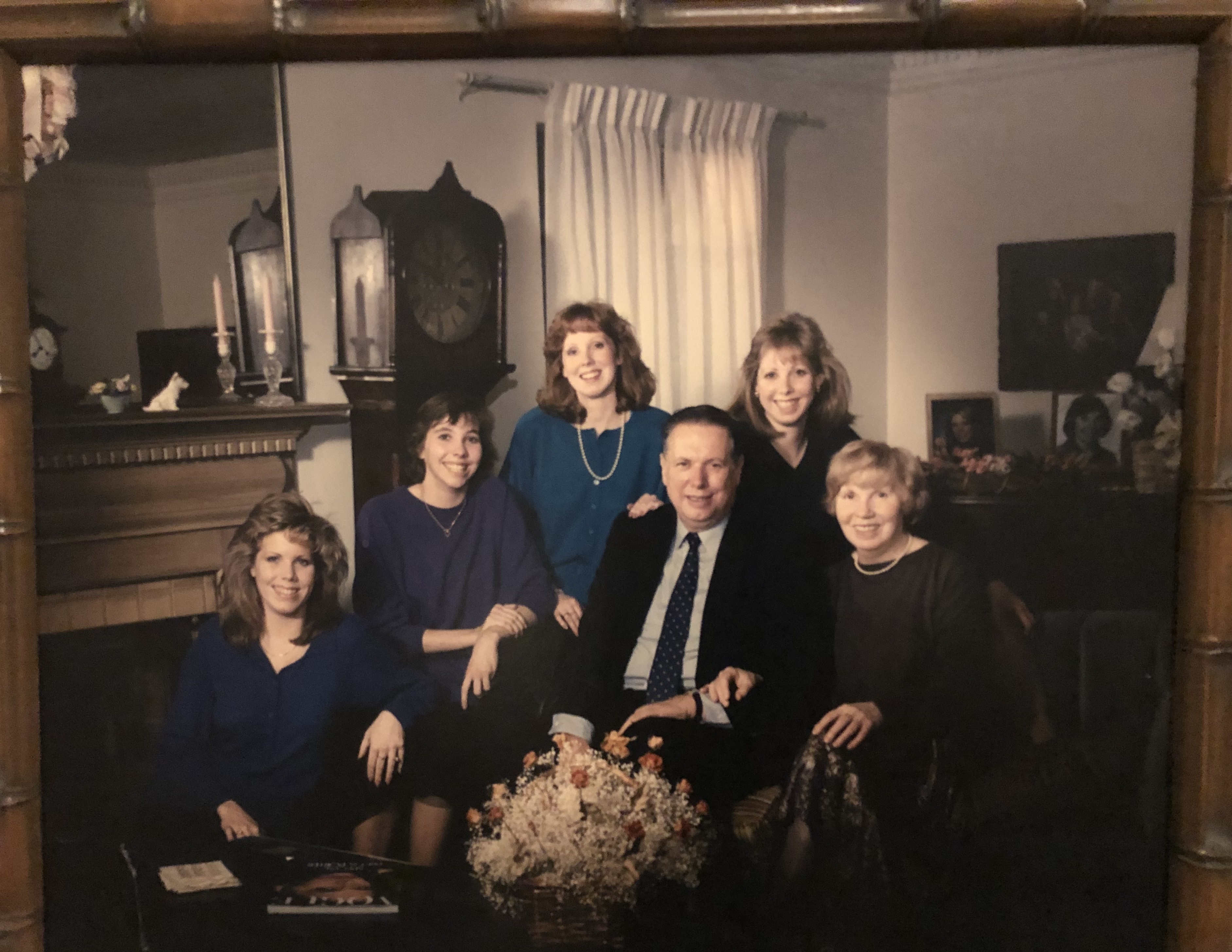
I am not proud of that long ago day I entered the studio and yelled into the intercom, but chalk it up to the sins of youth, and a lesson learned. That beautiful color portrait taken by Philippe of myself and family currently hangs in my living room. Studying it just yesterday I note that my hair is curled and styled in a way completely different than I had ever worn before. I am smiling broadly.

No doubt from relief.

*The photographer’s name and studio along with others mentioned in this story are fictitious.

Lovely Lily

Our Queen, lovely Lily

It is a Friday, late afternoon, and I have just gotten off the school bus. Walking up the front path of my Long Island home, I hear laughter from inside, amid the whirr of a blender. Following the sound of merriment to the kitchen, I spot my mother and my Aunt Lily sitting together at our white Formica table. Before them are two Waterford crystal glasses filled generously with their favorite cocktail, a Whiskey Sour, served on special occasions or simply to celebrate the onset of the weekend. Lily welcomes me graciously, then the two chat on, never quite running out of things to say.

My mother and Lily are first cousins and best friends, having grown up on neighboring farms in County Leitrim, Ireland. We were never quite sure who was the older of the two as they kept that secret neatly tucked away. They have had the good fortune once again of living in close proximity to each other, though this time, on suburban Long Island.

As evening draws near, my father arrives home, entering the kitchen through the garage, his suit jacket slung over his shoulder. Seeing Lily, his face lights up, “ELIZABETH!” he croons with a smile. Lily is always delighted to see him and returns the smile. She always loved my father.

A few words that come to mind when I think of my aunt are strength, devotion, and elegance. Her loyalty knew no bounds.

A story remembered…

My newly licensed mother, at last passing her road test after the ninth attempt, asked Lily if she would drive with her to visit my homesick sister, a freshman at Villanova University, in Pennsylvania. The drive is four hours.

Even with the knowledge that my mother had never driven on a major highway before, Lily’s answer is swift and without question. “Yes, dear, of course I will go!” And like Lucy and Ethel, I watched them drive off that morning, my mother at the wheel and Lily riding shotgun.

Later that evening, seven hours after departure, no word. My father whom I had never seen nervous, paces the floor. Then a phone call. From mom and Lily.

“We made it! With just a small delay. We somehow missed Pennsylvania and ended up in Ohio. Going to dinner now, goodbye!”

I have no doubt Lily aged a few years on that car ride, but never once mentioned the incident.

Her devotion to family was steadfast and could paint a far different side of Lily than she ever revealed and most ever glimpsed. There was nothing she would not do for her family.

One summer weekend in my youth, I accompanied my cousins to Atlantic City, New Jersey. Arriving back at the parking lot that evening after a day at the casino, we discovered that our car had been towed. Arriving at the towing lot, a burly, no-nonsense man stood at the desk, his T-shirt boldly displaying the words, “No excuses.”

“That will be $200 cash, no credit cards,” he growled.

My uncle Jimmy, after a day of gambling was short on cash and pleaded for another solution. British born and always the gentleman, it was not in his nature to argue. We all stood distraught, not sure what to do next.

The tow man then glanced at my uncle, his gaze slowly lowering to the beautiful gold watch my uncle always wore on his wrist. “That might do,” he said slowly with a smile.

Lily, who until that moment stood in the background, quietly approached the counter. Her face revealed a look I had never seen before. Staring at the tow-man, she spoke slowly, fearlessly, her lilting Irish accent laced in fierceness.

“I am a Christian woman. But, God forgive me, if I had a gun right now, I’d put a bullet through your head…”

We got the car back.

“If you are not laughing, you are crying,” she often told me.

She lived her life true to these words following the untimely death of her beloved husband, Jimmy, the loss of her second partner, the wonderful and kindly, Al, and maybe the hardest and perhaps least talked about blow, the death of her beautiful and charismatic son, John, in an auto accident while still in his youth.

As always, her faith got her through. “I pray to the lord every day, honey.”

But it was the phone conversations Lily and I enjoyed in later years after the death of my mother that I will remember most.

During each call, which generally took place twice a month, we would touch briefly on recent goings on but then always circle back to those joyous moments of yesterday.

Returning to those days, most close to the heart; Thanksgivings in Lynbrook while the movie, “March of the Wooden Soldiers” played on the television, my Uncle Jimmy meticulously setting the china tea mugs on the table for breakfast, as he hummed contentedly in a way that somehow, mimicked a trumpet. Summer days spent at the iconic Malibu Beach Club and family cabana on Long Island, Lily’s second love in life after her family.

I learned of her childhood days living in Mohill, Leitrim, and how her grandmother, once a year, would board a horse and carriage heading for a spa weekend in Galway. She loved how her grandmother, hell or high water, would take that trip each year. She spoke of how she lent my mother the money needed for her to attend nursing school and told me how much she missed her. “She was my best friend.”

And in those phone calls, that often exceeded two hours, we spoke only of the best of times.

I often think about Lily and feel saddened that our phone conversations will now only take place in memory. But my melancholy slowly eases as I envision the following scene, taking place at this very moment…

The whirr of a blender competes with the sound of laughter. Always that laughter. Lily and my mother are sitting at that same Manhasset kitchen table. But this time, Uncle Jimmy is there. He hums in that same endearing little way he had, of mimicking the trumpet, as he busies himself making that perfect cup of English tea. My father sits at the table between them, his jet black hair and wide grin, so vivid it takes my breath away.

I glance out our kitchen window. A stream of people are slowly and steadily making their way up the walk. Lily’s parents, her brother Thomas and sister Mae and other long-gone relations, childhood friends, and the ever amiable Al. Lastly, I see my handsome cousin, John. Lily’s cherished son.

He looks so happy.

The procession continues up the path following the sounds of merriment to our kitchen.

All eager to join in the reunion.

Grant’s Goodbye

I originally wrote this story almost ten years ago but decided to re-incarnate as I had the great pleasure of recently learning Grant, now a young man, is enjoying life, content and accomplished in the Pacific Northwest, surrounded by his beloved forests. He is hoping to be a Social Worker. His name has been changed in my story to protect his privacy.

He left us yesterday.  My twelve-year-old son’s best friend.  It was not unexpected, yet we were still not quite ready to say goodbye. And as we stood on his driveway that balmy September afternoon, an unspoken heaviness hung in the air amid feigned smiles and half-hearted well wishes.

He was to attend a therapeutic boarding school in the rocky mountains of Colorado, for the next two years.  A school that specialized in the emotional as well as the intellectual needs of boys who were struggling.  He had battled anxiety and ADHD for as long as we knew him but lately a more sinister villain called depression had joined the mix.  Public school was not working for him and his daily trips to the counselor left him dejected and angry.  He hated school, he told us again and again.

He took refuge in nature. Whenever upset, he would flee to the solace of the woods, headlamp in place along with a survival kit he had purchased on the internet. Grant loved the forest which seemed to hold for him, its own therapeutic powers.  As a going away gift we gave him a lithograph night-light.  Made of delicate porcelain it displayed a beautiful etched portrayal of the forest. And when lit, its golden hue cast an almost other-worldly hue of the woodlands, his most cherished place to be. 

He is a beautiful boy with deep red hair, fine features and fair skin.  His face reflects an impishness that is infectious. He is highly intelligent and intuitive.  My son and he became fast friends three years ago and enjoyed a special bond as best friends do. We both knew this path was the best thing for Grant but it did not make his leaving any easier as over the years he had become a fixture in both our home  and hearts.

All contact at his new school was to be via letter, no social media of any sort, so I made it a point that we would write to him, at least once a month to help with the homesickness.   I have a book of postcards, each one a different flower fairy illustrated by the brilliant Cicely Mary Barker, an 19th century English artist known for her life-like depictions of fairies in nature.  I chose for Grant a red-headed mischievous faced boy fairy and penned in the margin “this reminded us of you!” I then enclosed a second self-addressed card already stamped for him to fill out and return to us.

The next card we sent to him contained a dried wishbone from our previous night’s roast chicken. Growing up, my father would always save the wishbone for me and my sisters. I thought it was just the type of ritual Grant would enjoy.  “Find someone you like at your new school and break the wishbone!” I scrawled.  “We miss you.”  But then, a week later thinking again about the wishbone, I was filled with dread.  What if gets the long end and his wish is to come home? What had I done? In trying to comfort him I could possibly have made him feel worse.

One afternoon several weeks later, I paused at my son’s bedroom door after hearing him speaking to someone who sounded distressed. The voice was distinctively Grant’s.  Distraught, his words tumbled out in a hurried jumble of emotion. “I want to come home.  I hate it here. I miss everyone so much!” After a few moments, my son replied to his friend in a calm, yet firm voice “You have to push through…” 

I had never before heard my son use the expression.  When I asked him what he meant by “push through,” he explained that their middle school track coach would always tell the boys to push through their pain no matter how hard, and they might just find they were stronger than they ever knew. Grant struggled while on the track team due to asthma but always heeded the coach’s words.  And indeed, regardless of his struggles, never failed to make it to the finish line. 

I sometimes worried about how my son felt losing his best friend “Do you miss Grant?”  His response was always the same. “It’s fine mom.”  And then I realized, perhaps the strain of seeing his friend in so much pain was harder than letting him go.

The last thing we sent him was a care package right before Halloween. It contained fake fangs, a calendar book with different photos of forest scenes, two packages of his favorite gummy bears and a small stuffed owl that had strangely beckoned to me from high on a store shelf. I imagined the little owl sitting on his night table. I also included a pre-stamped fairy card he could send back to us with ease.  When I called his mother to review what I was sending, she paused when I had mentioned the stuffed owl.  “He asked me if he could have a real one last week for a pet!”

Several weeks later, we received the fairy card by return mail.  Grant’s familiar hurried scrawl contained the following sentiments: “I loved the red-headed fairy card, it does sort of look like me!” “ I’m learning to play the banjo!” Thank you for the owl, I keep him in my backpack.”  But it was the last line that remains with me.  “I still don’t like it here,” he confided, “but I am going to push through…” 

And those simple words were all I needed.

Let Them Eat Cake

We have all been there. Being presented with the dreaded fruit cake during holiday gift giving. This Americanized and far different version of the light and lovely, Italian Panettone, is often a leader in the well meaning but often sneaky world of “re-gifting.” Fruit cakes have been the core of cruel jokes the world over and polls demanding an honest answer, “fruit cake, feast or famine?”

This Christmas day, it was my turn. And so I sat with a frozen smile as my mother-in-law proudly bestowed the brilliant golden box before me. My three sisters moved their chairs closer and looked on with feigned interest and hidden smirks.

The lovely box was adorned with a bright red bow and contained several descriptive lines describing its contents; “Light as a feather and made with love from mother…” I pondered what mother, could do that to her family?

The enticing prose of the copywriter flowed “a painstaking seven day process to perfection in each loaf…” seven days might provide an explanation for the rock hardness of the cake.

And then the final line, “Bringing Families Together for Centuries.” Or apart for years. The real reason why families members don’t speak? Someone gifted another with a fruit cake.

Returning home that evening, I placed the gift on my kitchen counter furiously contemplating to whom I could pass it on. The Golden Rule, “Do unto others as you would have them do unto you” echoed in and out of my consciousness. Glancing again at the festive box it represented a cruel dichotomy – the outside an innocent Mr. Hyde and the inside, the despicable Dr.Jeckyl. In the end, I did the only reasonable thing possible. Pay it forward.

Our home borders a hundred acre nature preserve with every creature imaginable in residence. Waiting till night fall I carried the fruit cake out to the woods and removed it from the box. I gingerly placed it just off the walking trail near a bush resembling a small Christmas tree. With a new found lightness in my step I returned home. God Bless us everyone!

The next morning I poured myself a cup of coffee and with a pounding curiosity, made my way outside. Approaching the tree underneath where I had laid it the night before, I stared in confusion. The cake in all its splendor stood – untouched. Several pieces of fruit had been dislodged from the foundation and now lay scattered aside amid a large chunk of crumbled cake. I imagined a wily raccoon, delighted with his Christmas morning find, removing several with his delicate and agile paws, gobbling them furiously and then realizing in grave disappointment he had been duped. It was a fruit cake, plain and simple.

Inedible to both man and beast.

To David on his 60th Birthday

I hold a photograph in my hand. A picture from long ago. Though frayed and fading, it is one that tells a story. A melancholy tale of family, friendship, love and loss. And the unrelenting passage of time.

I study the image taken with my father’s old Polaroid camera. Fifty years have come and gone, yet that day, forever etched in memory.

Two young brothers sit together on the front steps of our Long Island, New York door stoop. Clad in hand-woven Irish sweaters, their cheeks are ruddy, speckled with rosy patches gifted from the late autumn chill. Their skinny, knobby knees are scraped and dirtied from a recent romp in the yard. The older boy David, is dark-haired and although the photo holds no date, is likely around six years old. His younger brother leans contentedly onto David’s side. His small hand is just ever so slightly brushing his brother’s, whether in comfort or familiarity. He is fair-haired with a sprinkling of freckles on the rung of his nose. I guess him to be four years old.

Their younger sister, Aideen, appears to be no more than two and a half years. She is held by her mother Maureen, who stands behind the boys. Aideen nestles her small chin neatly onto her mother’s shoulder. Maureen gazes steadfastly into the camera with just a hint of a smile, her beautiful face a portrait of strength and calmness.

The children’s father, David Sr., is seen in the distance. He stands in the yard, lost in thought. He has been a close friend of my father from earlier days and a name spoken with admiration in our home for as far back as I can remember. Their paths have crossed in and out each other’s lives over the years, sparked by a shared love of the restaurant business; my father a restaurateur in New York City and David, in Dublin and the Southwest Coast of Ireland.

Though their roots and I suspect hearts, have never left Ireland, David and his bride Maureen relocated to the U.S. some years back, where they married. David has followed his passion. A career he has always loved, working once again back at the helm of the restaurant world, this time in New York City. Three beautiful children followed.

The family is visiting this Sunday afternoon for a day in the suburbs. The atmosphere is relaxed, one of contentment, the kind that old friendships evoke. And the sweet rhythm of life plays on.

Shortly thereafter, it all falls apart.

It was a day like any other. A visit to New York’s Central Park. A far cry from the emerald green hills of Ireland, but a reprieve from the city’s endless skyscrapers, nonetheless. As the boys played, a Rabbi who was seated on a nearby bench approaches Maureen. “Your son,” he says, motioning to David, “is ill. You must bring him to a doctor.”

And with those words, a family’s life changed forever…

For years and years I forget this family my parents held so dear and the tragedy of young David, who shortly thereafter the Rabbi’s omen, was diagnosed with Leukemia. And at age eight years, while back home in Ireland where his family had returned, quietly slipped from this world.

I had forgotten this family from my childhood and the sadness that be-felled them, until the arrival of an email, written more than a half century later. A letter, that I now understand, returned them to me.

It was written from a now grown Aideen, the baby in that long ago photograph, who was seeking my help. Did I have any photographs or stories of David from their family’s visits to us in New York?

A string of emails followed, chasing the years.

We spoke of our parents now gone, and their everlasting friendship. Of our current lives and families; Aideen’s in Ireland and mine in Connecticut. She talked of her three siblings; two younger sisters who were born back in Ireland after the family’s return and her older brother who had remained in Ireland to raise a family. We touched on the good times and bad, the highs and the lows, the laughter and the tears.

Aideen and David

We spoke of her brother David.

It would be his 60th birthday on December 20th, of this year. His mother Maureen, who perhaps bore the brunt of losing David more deeply than the rest of the family, never spoke of the loss of her first born son. It was simply too painful. So Aideen and her siblings carried on, from childhood to adults, with just a scant memory of an older brother they never really had the chance to know.

But now, all these years later, Aideen felt it time to not just remember David, but to celebrate him.

We felt it only fitting to meet at the beloved Irish establishment Rosie O’Grady’s in Midtown Manhattan, where both our fathers and families had worked together so many years before. And we had little doubt their spirit was with us that night, pleased to see we had reunited once again. A friendship found, through one departed.

“He brought us together you know,” Aideen said to me later that evening as we stood on the corner of West 51st street, saying our goodbyes. And amid the backdrop of the bright lights of Radio City Music Hall, I snapped the below photograph, to prove her right.

A gift to David, on his 60th birthday.

Aideen (left) and me, NYC Aug 2025

The Soup Thief

This afternoon I visited the small market that inspired this story. There was a chill in the air which prompted the need to re-share with all my fellow soup lovers…

Day One – Torture. It is nearing lunchtime and I am missing my daily fix. Surely I can make it till dinner. Or can I?

Day Two – I am ashamed to say that I broke down and drove past the store, but success! did not enter, just circled, three times…

Day Three – The cravings have ceased and I have scheduled an exercise class for the same time I usually case the store, though it is unfortunately, directly across the street.

I am addicted to soup. There I have said it. They say that is the first step.

It began in those formative years of childhood. My mother a soup lover herself made it a family staple. My son’s kindergarten “All about me” poster highlights “Tomato soup with a touch of milk” as his favorite food. He and his brother still have soup almost daily for lunch. I just heard of a study that claims as an adult, you crave those foods you loved most as a baby and youngster. I have loved soup for as far back as I can remember. Zesty Tomato, the steamy, soothing broth of Chicken Noodle, the silky smoothness of “The Creams”… Cream of Chicken, Cream of Celery, Cream of Mushroom, Chowders, both Manhattan and New England battled for top dog in my dreams. When I was bitten by a Dalmatian as a child, I recall the calming words of my father as we drove home…”we will make you a nice bowl of soup.” Yes, I love soup. So the day I discovered a certain market in a certain area of Connecticut that offered complimentary samples of their soups, I was hooked.

But then it turned dark. What began as a simple game of choice spun out of control as I found myself visiting the store often on a daily basis for a quick sample of the fabulous soup. I could never have just one.

The “sample” turned into two, then three as I maniacally went from pot to pot, ladle in hand. I had different routines. Sometimes, I would stand and sample all six choices at a time. Other days, I would ladle one sample into the small Dixie cup set out for those customers who could indeed have just one, and cruise the store casually, cup in hand pretending to find other groceries on my list. On good days, there would only be two soups of the six whose flavor struck my fancy. On bad days which was more the norm, I was torn between all six, repeating the sampling of my favorite ones again and again. When Manhattan Clam Chowder was set out, I could go easily through four dixies.. The travesty of this whole affair was that after my obsessive sampling, I was no longer hungry enough to buy a cup of soup and ended up leaving the store with one or two other needless items I picked up hastily, guilt ridden. I could not help it you see. I really intended to buy a cup of the soup but as each sample turned into one more delicious than its predecessor I found I could not stop, all the while wary of a hidden camera or wily store manager who would pop out from behind the fruit stand and accost me “You!!! NO MORE SAMPLES! We are on to you!”

Yes, I had become one of those people I would watch at Costco or Stew Leonards as they lingered at the sample cart, wolfing yet another pig in a blanket, then circling and returning not ten minutes later for the second tasting. Lunch in samples. I had hit rock bottom. I was that person. I was a soup thief.

I often drive by that market and recall the soup bar. I pray that I am not the feature attraction at the company holiday party. I visualize a group of employees, eggnog in hand, a happy hour of sorts at my expense. They revel around the television as the tape plays. They pause, freeze, then replay again amid snide comments: “Watch how she walks to Produce, picks up a head of lettuce and then circles back again for another “taste” of the hot and sour!” Howls of laughter. “I wonder what happened to that lady, she never comes in anymore…” I squelch the delusion and pray it is only that. I feel relieved I have conquered my addiction. I no longer frequent the store.

I was in Stop and Shop yesterday and spotted their soup bar. Three simple choices of soup were set out in a tidy row, their steam and flavorful aroma beckoning shoppers. I approached the soup bar, my heart pounding. There were no cups for sampling.

I was saved.

Where have you gone, Uncle John?

I remember how he would greet us, his four young nieces, with a cock of his head and a shy smile. Then without fail, that playful wink of his eye. And every time he winked at me, I felt like the most important person in the world.

On each and every visit to our Long Island home, he held a gift, generally a box of chocolates, tucked under one arm, and topped off with a simple tidy bow, for he would never dishonor my mother and arrive with “one hand as long as the other,” a favorite of her Irish expressions and a nod to proper etiquette.

Fresh off the boat from Ireland, the world was full of promise and dreams yet realized for my Uncle John. He had immigrated to America, like his older sister before him, to settle in Woodside, Queens where a job in construction awaited. Across the Irish Sea he came, to a land far different from the green fields of his home in Cloone, County Leitrim. And a new life beckoned.

I can see him clearly still, sitting quietly at our round white Formica kitchen table, contentedly reading the Irish newspapers as my mother prepared his breakfast. Always the same; a poached egg on one slice of toast and a cup of tea. For that he was grateful. I could see it in his eyes as he nodded at my mother as she placed the plate in front of her younger brother. A gentle and modest man he visited our family’s home once or twice a month, the frequency I imagine, having something to do with how far the scale tipped toward loneliness at any particular point in time.

And then he would be gone. No chocolates, no comforting wink, often, for months at a time. “Where is he,? Where is my Uncle John,?” I would query my mother, staring up at her intently with the innocent eyes of a six year old, who nevertheless, demanded an answer.

On some days when I asked her of my uncle she would turn from me but not before I glimpsed her eyes, dampened and shiny with tears. On other occasions when he went missing for a particularly long stint, she would simply retreat to her bedroom too distraught to respond to interrogation and I imagine as well, to quell the pain of a missing brother no longer shielded from the woes of the world by her fierce and protective arms.

But then he would return. Once again sitting at the same kitchen table, fork in hand, eating his poached egg on that single piece of toast made lovingly by his sister. On some days I noticed his hand would tremble as he lifted the cup of tea, served in my mother’s finest Lenox china, as beautiful and strong as her love for him.

And in that moment, all was right once again.

As the ebb and flow of life rose and fell over the passing years, my uncle John’s visits became a wee less frequent. And as I grew older, I at last learned the reason for his absences and my mother’s periodic sadness. “Your uncle has a disease,” she told us, “a terrible disease of drink, an affliction called Alcoholism.” And I learned that day that his sickness, was harder than most to conquer as there existed no pill or tonic to ease his pain. A terrible life sentence for her younger brother, my sweet Uncle John, whose cure required the mental strength of Goliath.

It has been three months..six months..eight months now. The longest stretch he has gone missing. I carefully watch my mother. Her mood shifts with time. In the early months, worry. And as the hands of time advance, desperation, followed by a simple aching sorrow. And in the end, the helpless inevitability of acceptance.

Her brother John, forever gone.

My mother never did learn what became of my uncle as it was likely he had lost all forms of identification during his drinking bouts. A face without a name, a body never found and tips from people who had known him from the neighborhood, that never quite panned out.

A man’s life ended. The hows and the whys forever unknown.

“He is probably buried in some pauper’s field,” my mother lamented as I sat on the edge of her bed one particularly bleak afternoon as she cried. For it was certain now, my Uncle John had died. And then she told me a story. A story which few knew. A story, which broke my heart.

Before he came to the U.S., my Uncle John was in love and planning to marry a local Irish girl. But then, a dismaying discovery; his fiancee was a distant cousin. So distant in fact no one could quite trace the lineage. But it mattered little. Being a small town in rural Ireland, gossip often ran rampant. My mother said my uncle was mercilessly chided by all who learned the tale. They insisted he could never marry this young girl whose heart he held so dear. He too agreed and came to the realization it was not to be. Beaten down, my uncle John broke off the engagement and headed to America with a deep and profound sadness as heavy as the trunk that accompanied him. Shortly thereafter, his struggles with alcohol began, perhaps in trying to dull the memory of his one true love and a life together that would never be.

I often think of my mother and her heartache in losing her youngest brother with an ending always left untold. I wish I had thought to suggest a memorial for my gentle Uncle John, but never did. I am sorry for that, mom.

But though sadness engulfed his later life, I will remember my sweet Uncle John and his visits to my mother. His generous nature forever recalled in those cherished boxes of chocolates and heartfelt winks, bestowed so generously in happier days☘️